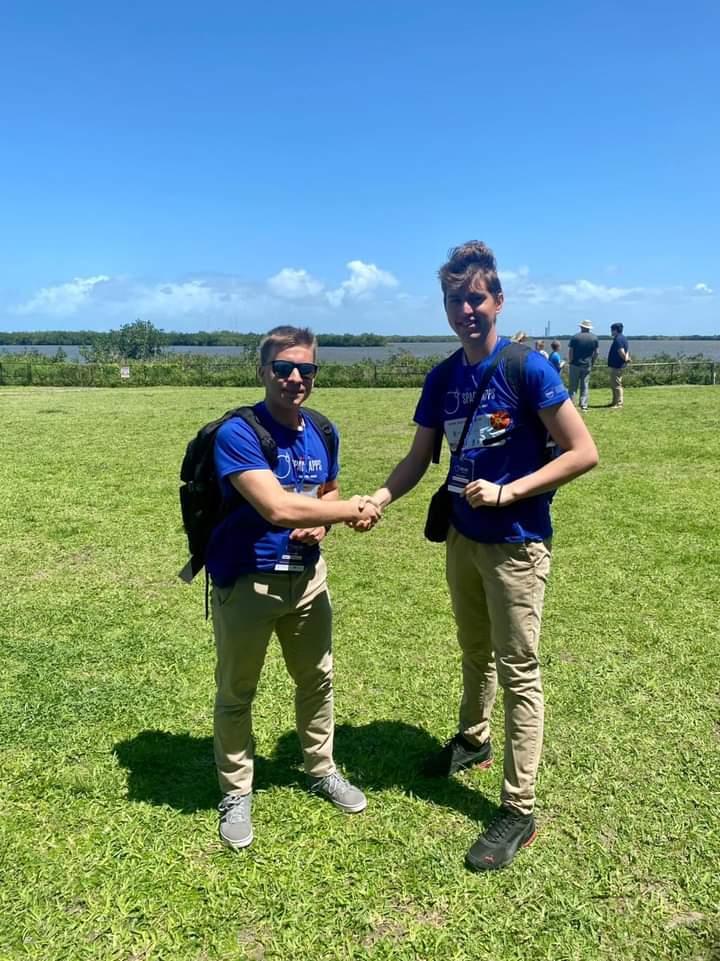
Competed in NASA's global hackathon with a real-time International Space Station tracking application — combining orbital mechanics, telemetry systems, and programming. Visited Kennedy Space Center as part of the challenge.
The NASA Space Apps Challenge is NASA's annual global hackathon — one of the largest in the world — where teams of students, engineers, and innovators tackle real-world space and Earth challenges using NASA open data.
Mario Blazevski and the AerTh team competed with the "Track the ISS Station" challenge — building a real-time application to monitor and visualise the orbital position of the International Space Station using live NASA telemetry feeds.
As part of the Space Apps Challenge experience, the team visited Kennedy Space Center, NASA's primary launch facility on Merritt Island, Florida — one of the most iconic sites in the history of human spaceflight. The visit deepened the technical context behind the ISS tracking project and provided direct exposure to active launch infrastructure.
This project was an early demonstration of the computational and systems engineering skills that now define Mario's work — combining orbital mechanics theory, real-time data integration, and embedded programming in a single end-to-end system. The same approach underpins later UAV telemetry and autonomous navigation projects.
On the grounds of NASA's Kennedy Space Center, Florida — 2022.
From orbital mechanics to embedded autonomy stacks — our engineering team has the depth to take on your hardest technical challenges.